Get Your Master’s in Nora Ephron Studies.
Announcing a new class — no homework required! Plus: An interview with filmmaker Leah McKendrick on her rom-com ‘Voicemails for Isabelle’ and upcoming Shania Twain biopic.
June 19, 2026
You’ve Got Q&A: Leah McKendrick
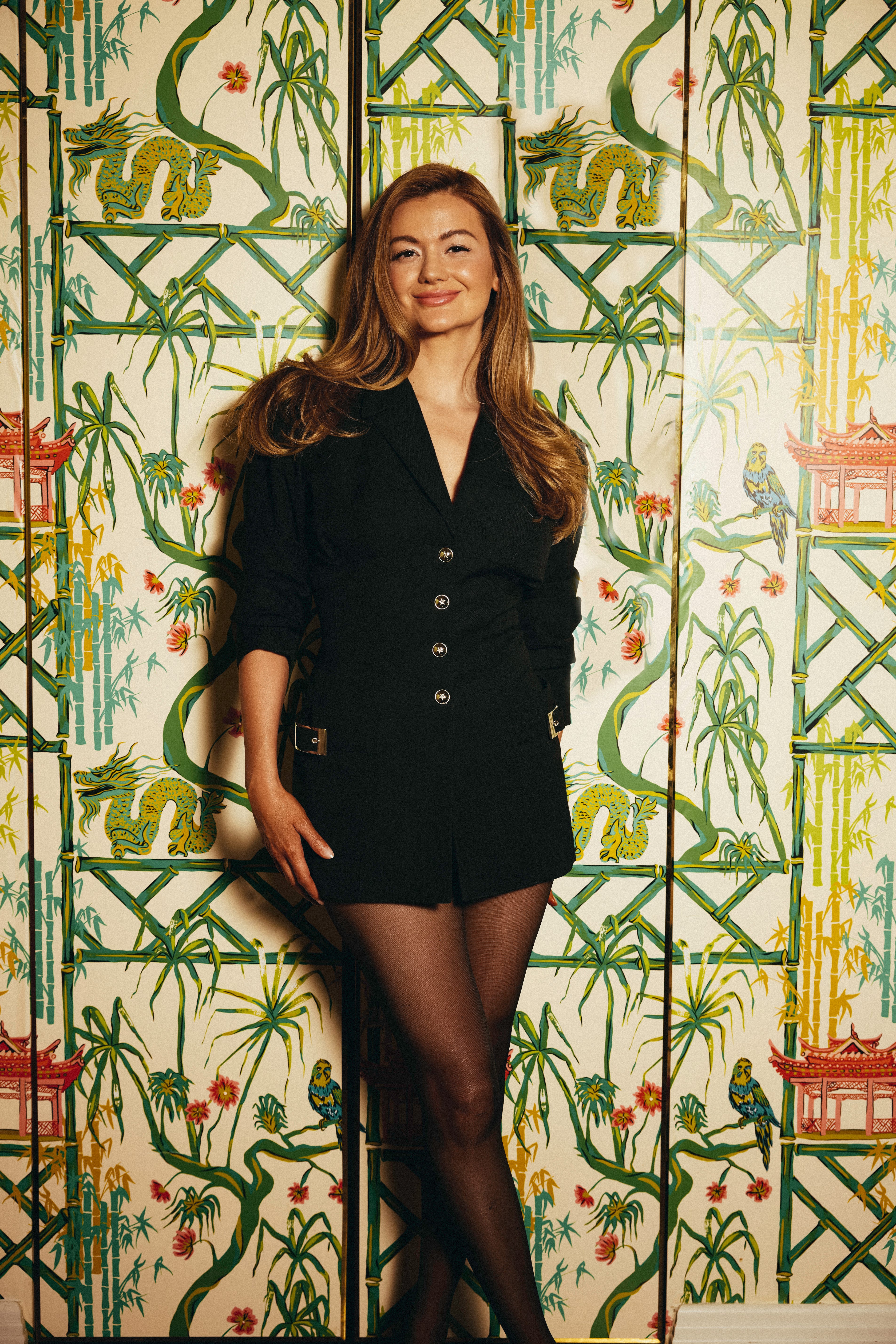
This week, I spoke with Leah, the force behind Voicemails for Isabelle, which just dropped via Netflix. The rom-com stars Zoey Deutch as Jill, an aspiring chef from San Francisco whose hilarious, unfiltered voicemails to her late sister are redirected, without her knowledge, to a handsome stranger in Texas. That stranger, Wes (Nick Robinson), falls for Jill because of her cringe confessions. This is why we love Wes (and somehow manage to forgive his deceptive practice of surveilling her voicemails). Both Robinson and Deutch are charmingly compatible, while Nick Offerman and Leah appear in funny supporting roles. Leah, sporting multiple hats, also directed and wrote the film. Without further ado:
Voicemails for Isabelle is such a delight. I laughed and I cried. What inspired you to write it?
What inspired me was my love for my little sister, Olivia, who is alive and well and healthy. She’s the one who really taught me what true love is. That’s really hard to find out in the world, but at least you have a barometer so you can know what it feels like. If you’ve never known what it feels like, how do you know how to identify it? So, I thought to myself, “What if I wrote a rom-com about a girl who loses her soulmate and can’t really let go, and leaves these voicemails for her sister that really reveal her heart?” It would be impossible to not fall in love with that.
Her voicemails are like the best group chat: amusing and a little unhinged. I love that Wes hears all of this, and really gets to know Jill as she truly is and not how she would, say, present herself on a date.
I always try to portray women as they are. Not as the cool girl. Messy and embarrassing, and at times, immature; at times, deeply empowered. And brave and just all over the place. And so, I thought [Wes] would be my favorite type of male character. He has his own faults, but if he’s really loving her for being completely, authentically herself — the way she was with her sister — that makes me love him.Subscribe
You sold the screenplay on spec in 2019, and the project initially started with a different director, Sharon Maguire, and Hailee Steinfeld starring. That package fell apart, but then last year the film came together in the way that it should: With you directing your own script. How did that happen?
When it’s a studio film, it’s a long journey a lot of the time, and you go through many iterations of what the film could be. Everybody has schedules and we had a pandemic and we had a writer’s strike. It’s a miracle that it stayed alive.
In that time, I became a director and [Voicemails for Isabelle] was always my baby. This was the first rom-com I ever wrote. It was my first big feature film sale to a studio. It was on The Black List and a lot of people knew the script and knew me from the script and would ask me about it. And it was always kind of the one that got away. That I felt so deep in my bones. I wrote it really fast. It came flowing out of me, which kind of gives you imposter syndrome when you’re writing something that isn’t flowing out of you because you’re like, “Oh God, I know what this is supposed to feel like when it’s really in alignment.” But I never got over it. And I’m really grateful that my producer, Becky Sanderman, also never got over it and always believed that we were going to somehow get it made.
And when I made [the 2023 indie comedy] Scrambled, I proved to myself that I could direct. Then, I just really wanted Voicemails back. I really wanted it and Netflix saved the day and stepped in and saved it for me and said, “We’re going to let you direct it.”
That’s freaking awesome.
It’s just a dream and insane that they would do that. But I think it’s a great lesson. Nobody’s going to hand you anything unless you’ve sort of done it for yourself and proven to yourself and everyone that you can, in fact, do it.
You kind of have to prove yourself and stake your claim. If you are politely sitting in a corner raising your hand, waiting for somebody to call on you, I think you’ll be waiting a long time, especially in a business like this. And I felt my film deeply in my soul, and I was drunk with power after making Scrambled, because I was like, “I got to do everything I wanted to do. I got all the music I wanted. I got the actors I wanted. I didn’t have much money, but I had enough and I’m just going to keep making movies like this because I don’t know that I believe in a system that has me waiting for permission.” And I feel like that’s when Netflix changed the game for me again. I had given up on studio film and then they came in and said that I can do what I do within a studio as well and I’ll be protected and I’ll be able to have my two Taylor Swift songs.
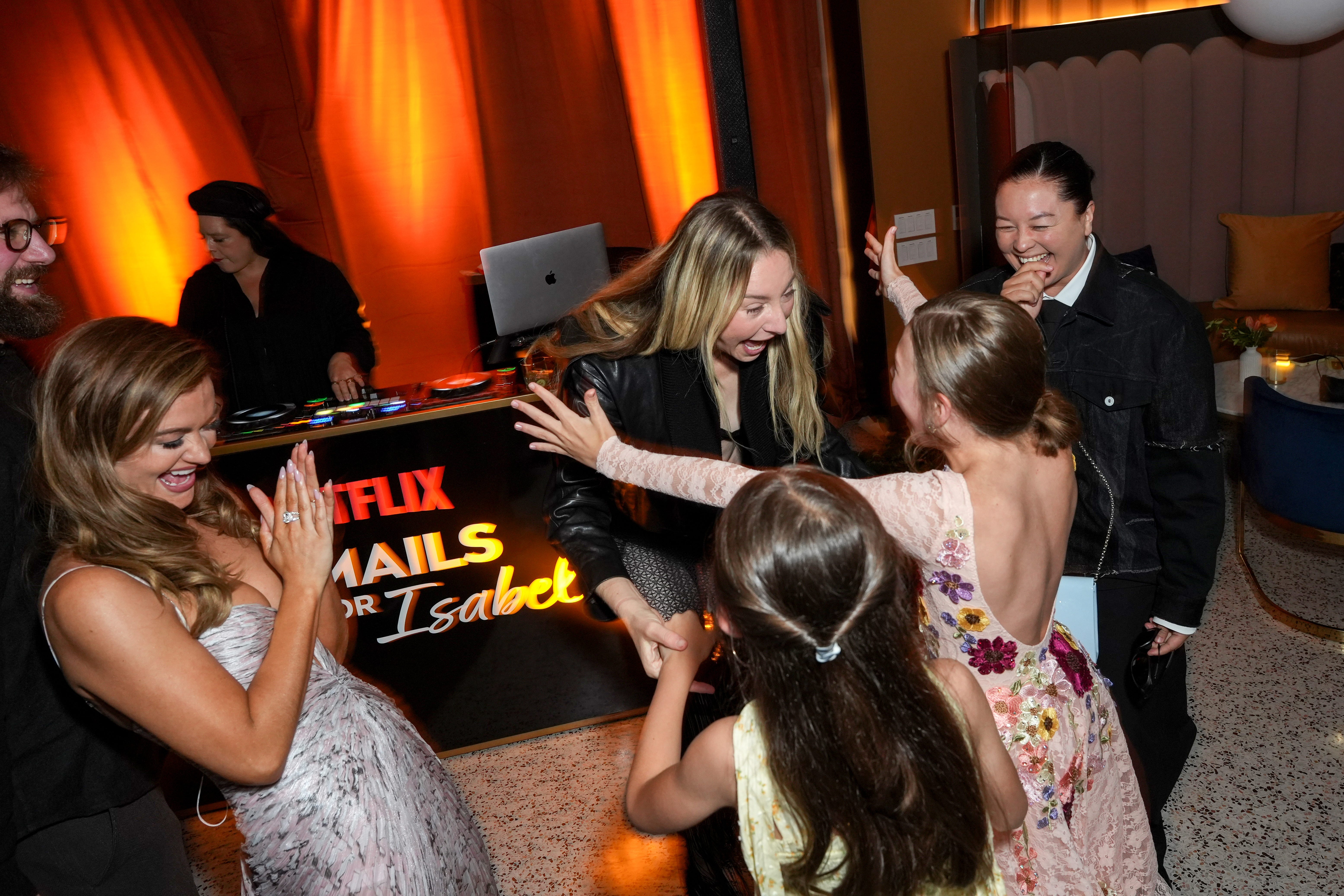
With a rom-com, cast chemistry is everything. How did you arrange Zoey and Nick Robinson’s cinematic meet-cute?
We attached Zoey pretty quickly. Zoey had read the script years before and wanted to do it.
She is so hilarious as a human, and in the movie, she’s so open-hearted and deeply emotional and emotionally available. And when she looks at you, she’s so locked in. She’s so present as a human, and it’s a good gig looking at her face for a year. It is a great gig. Obviously, she’s beautiful, but she’s more than that. She has such deep expressive eyes. She had the soul of Jill, and there was no way around it. It was always going to be Zoey.
The search for Wes was a little bit of a journey. And when I met with Nick, it was magical and I just felt like a 14-year-old falling in love for the first time. It felt very pure. This is a quality that you cannot fake. There’s something about Nick that’s, like, you’d follow him anywhere.
So, we got Zoey, we got Nick, then we got green-lit. The next week, I was off to Vancouver to start prepping. I prepped for, I think, two or three months. That’s when you’re casting the rest of the actors and finding locations. That’s the hardest part — I mean, I think the hardest part is probably development, because you just don’t know what’s going to happen and you don’t know if [the film is] going to actually get to see the light of day. And then the next hardest part is prep because things are all falling apart, and then over here, they’re falling together. It’s this constant, “We just lost that, but we gained this.” And everything feels like it’s the end of the world. So, you’re [reframing], “No, no, losing that location is not the end of the world. There will be another location.” And then shooting [the film] is like going to war, suiting up for battle every day, fighting for your goddamn life, but it’s the most joy and pride and purpose you’ve ever experienced. And then, in post, you can finally breathe and eat Cheetos and you’re just a happy baby.
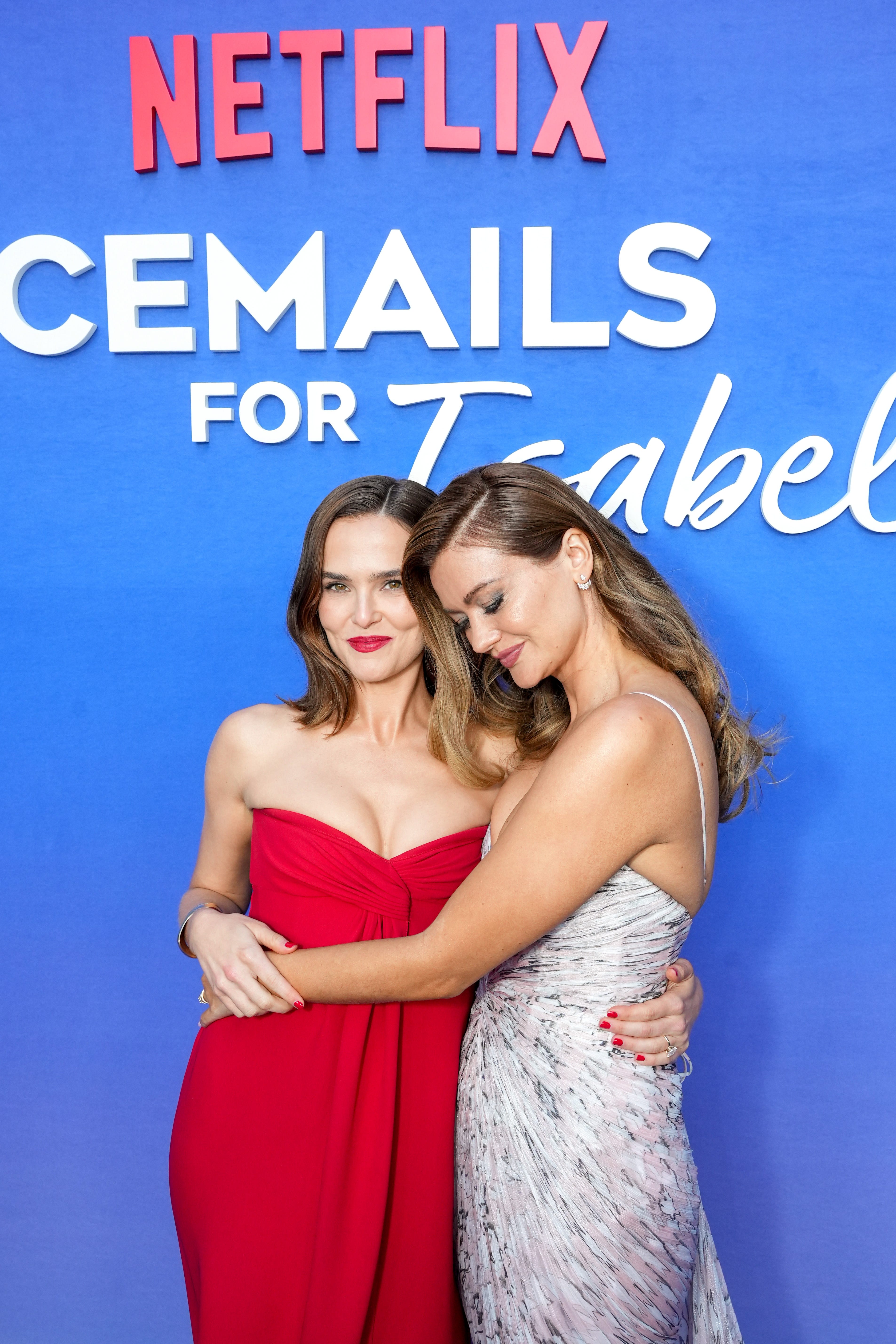
You started your career as an actor and play Breeda, one of Wes’s best friends, in Voicemails for Isabelle. What’s it like to step behind the camera and direct yourself?
Honestly, easier than people think. It really is. So much of acting is listening. If you’re thinking about your arm doing something weird, your lip doing something weird, then you’re not listening. You’re the best listener when you’re directing because you’re watching [everything]. You’re seeing if you’re getting what you need. You’re so locked into the scene on a whole other level, and all the insecurities that you have as an actor suddenly feel so trivial. You just don’t have the emotional-mental bandwidth to worry about if your skin looks clear. You suddenly just don’t care. You’ll care in post, trust me. You start caring a few months later. Wishing you had put on a little more makeup, a little more powder.
I feel like so much of my early career was playing this kind of wild party girl. The sexy girl at the party. These throwaway twenty-something, dumb-girl roles. It put so much focus on the way that I looked and how I presented physically. You start to believe that’s all you really have to offer, even if it’s an unconscious belief. And when you’re the director, you get to trash all of that.
No, I’m not here to be the hot, sexy, dumb girl at the party. I have a higher calling in this film and behind the camera.
Often, I think the best directors were actresses first. They give the best notes. I’m sure Zoey felt that you saw her as something other than a cute girl.
I will own that. I will own that about myself as a director and somebody who is an actress and a woman. I find Zoey beautiful and adorable in a sweatshirt. In a scrunchie. I think it’s a female-gaze movie. It’s a movie from the female gaze. There are million ways that this film is different — that I’ll never even know. Just because of my POV on the world, from behind the lens. I’m proud of that. I’m proud of having a female gaze.
Mostly you were on location in Canada, but you also shot scenes in San Francisco, where you grew up and I live now. We love a movie set in SF!
I cried a lot, I will say. I cried a lot. When something is better than what you imagined, or it’s exactly what you were hoping for, it’s so emotional because you’re like, “I can’t believe this dream is coming to be.” I felt that way during the bench scene [overlooking the Golden Gate Bridge] when Wes [finally meets Jill in person]. I was screaming. I was like, “Oh, my God.”
Getting to shoot in my hometown was surreal. I was shooting blocks from my parents’ house, and I just couldn’t believe it was happening. It was at the end of the shoot. You’ve kind of found your rhythm, you’re like, “I can’t stop and think how crazy this is because I’ll just start crying and never stop.”
We did not have a ton of time in San Francisco. We covered 17 locations in one day.
WHAT!!! You need an Oscar for that.
Julia [Swain], my DP, who did Scrambled with me, is also an indie kid. That’s where our indie-film cred comes in handy. We’re like, “There’s no trailers, kids. Sorry cuties. Those cushy days in Vancouver are over. We are grabbing a camera and I am grabbing you, and you are changing in the van and we are running. We’ll cut it down to a single shot, handheld. We got to go.” To me, I would rather have an imperfect shot of the Palace of Fine Arts, then no shot of the Palace of Fine Arts.
Right on. What other locations were absolute must-haves?
I’m not going to lie, it was so important to me to have Golden Gate Park. It’s in The Wedding Planner. And I remember being a little girl and watching The Wedding Planner and J-Lo [in city scenes] and saying, “That’s my home. I live there.” That felt full-circle to me, not just to pay homage to The Wedding Planner and all the great rom-coms that came before me, but also because it’s the San Francisco rom-com that I grew up with. It’s kind of special.
What makes SF such a romantic setting, on and off the screen?
We have every type of human in San Francisco, from all walks of life. You don’t know who you’re going to fall in love with tonight. You don’t know who you’re going to meet, where you’re going to end up, what kind of great cocktail you’re going to have. You can fall in love with a preppy guy in the Marina. You can fall in love with an artist in the Mission. You can fall in love with an Italian in North Beach, baby. I love the diversity of my city. I’m proud that my whole family is there and that we are San Franciscans through-and-through. There’s always some music festival or art festival. There’s always a drag show. My sister takes us every year for Christmas. We see the Golden Girls drag show. It’s in the Mission and a tradition of hers. And I love that that’s normalized. It’s a wild city of a lot of adventure. You can never predict anything and that’s love.
So, a little bird — OK, the Hollywood trades — tells me that you are writing and directing a Shania Twain biopic! I MEAN.
It’s so surreal. People ask about it and I almost don’t even … I can’t even fathom it myself. I don’t even know how I got this lucky. And I really was manifesting doing something musically-driven next. I’m a recovering pop singer and I was like, “I just want to have a big spectacle. I want women to go to the theater and wear costumes. I want to have this cinematic musical event.” And then [Sony Pictures] called me about Shania. I was like, “Are you kidding me?”
I’ve spent time with her and she’s everything you would ever want her to be and more. She’s an icon, a legend, but also the best hang. And I love drinking wine with her and hearing her stories and sharing my stories and sharing our hearts with each other. I’m truly living the dream. Next week, I go to London to see her perform at Wembley with Harry Styles.
I read her memoir many years ago, long before I was directing movies. And I told a million people about what had happened in her life and how iconic she is. I really feel that I’d been manifesting this for a long time.
You don’t notice, but I have full-body chills right now.
Thank you. I’m going to treat it so right. I’m going to fight for it and we’re going to have something really beautiful at the end. I know we are.
Would you … star in the biopic? I can see you as Shania.
One of the first things she said to me [was], “We look alike.”
You do.
And I was like, “I can’t even handle that. It’s the greatest compliment I’ve ever received.”
I thought about [playing Shania]. The truth is, I feel strongly that I need to get it right. And that requires me watching the movie as it’s happening. And so much of what I do as an actor is experimental. I’m just living and I’m free and that’s why I can trust myself acting and directing at the same time. But it’s very different when you’re playing a real-life figure. You need to do it right. I’m going to stay firmly behind camera, make sure every detail is perfect.
Fan to fan: What’s your favorite Shania song?
“Man! I Feel Like a Woman!” Let’s go, girls.
END CREDITS
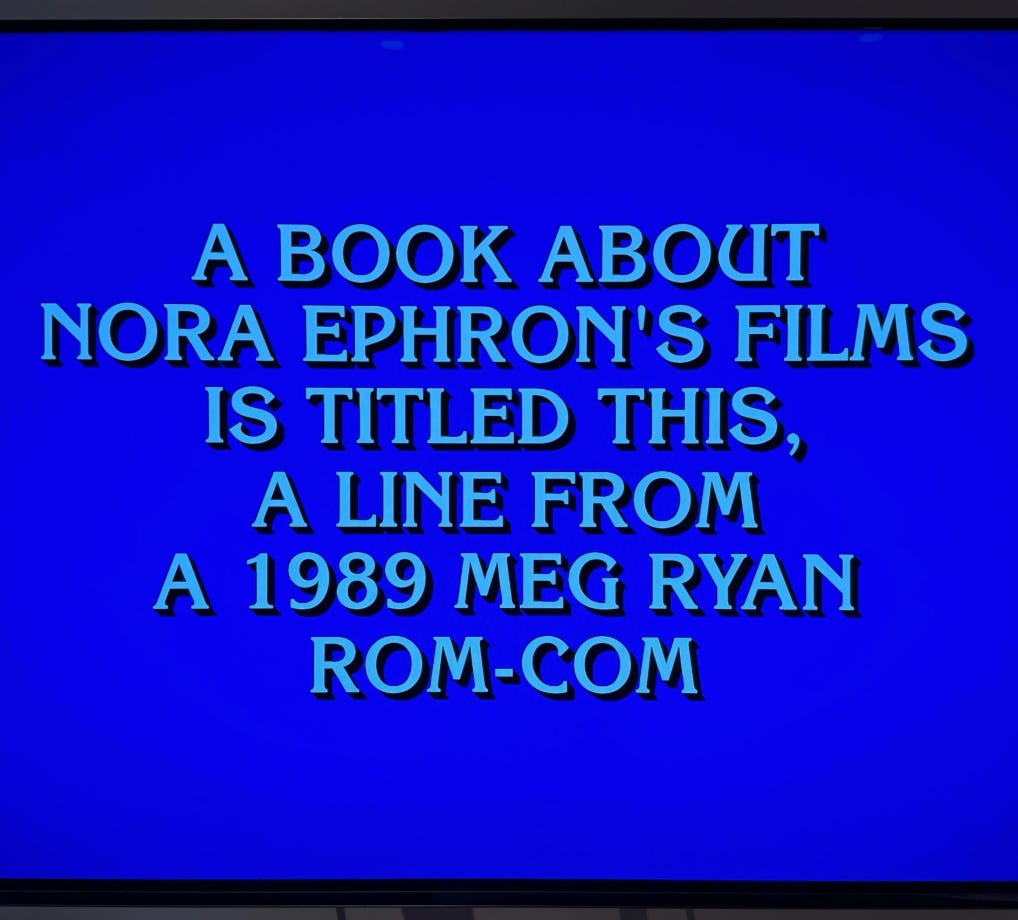
Congratulations are in order for the AMC B-Listers, who won Pop Culture Jeopardy! earlier this month. I love those guys. In one round, they answered a clue in the category of “Films Written by Women.” That clue was: “A BOOK ABOUT NORA EPHRON’S FILMS IS TITLED THIS, A LINE FROM A 1989 MEG RYAN ROM-COM.”
Then, they correctly guessed the name of my first book, I’ll Have What She’s Having: How Nora Ephron’s Three Iconic Films Saved the Romantic Comedy. CUE THE BIGGEST SURPRISE OF MY LITERARY LIFE. Do I get a T-shirt now???
Thanks for reading, and I’ll return next week with another letter!
Yours in “Films Written by Women for 1200,”
Erin